Roof rats (*Rattus rattus*) enter residential attics across Riverside neighborhoods via overhanging palm fronds and citrus canopies, particularly near mature groves in Arlington, Hawarden Hills, and Woodcrest. Unlike a…
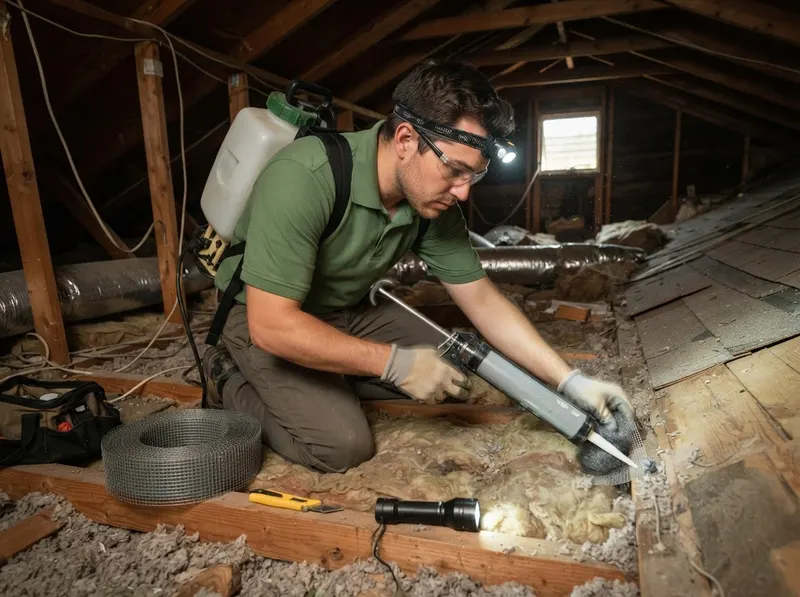
Roof rats (*Rattus rattus*) enter residential attics across Riverside neighborhoods via overhanging palm fronds and citrus canopies, particularly near mature groves in Arlington, Hawarden Hills, and Woodcrest. Unlike a basic extermination spray, rodent exclusion establishes physical domestic protection by sealing vulnerabilities such as open gable louvers, dormer returns, and foundation weep screeds. Sealing requires 1/4-inch galvanized hardware cloth and metal flashing because rodents chew through spray foams, wood, and standard plastic screens. For minor localized activity with intact thermal barriers, targeted exclusion seals entry points while leaving insulation undisturbed. Conversely, sustained colonies flatten fiberglass insulation R-values through waste accumulation, requiring complete structural remediation to safeguard indoor air supplies.
Biochemical contamination poses distinct hazards when HVAC return plenums draw conditioned air near attic crawl spaces in Orangecrest, Canyon Crest, and Victoria Heights homes. Roof rats leave pheromone pathways that draw outdoor colonies directly to existing breach points. The sanitization protocol employs an industrial HEPA extraction system operating at 1,500 to 2,000 cubic feet per minute to capture airborne particulate, dried fecal matter, and dander without venting dust into residential rooms below. After contaminated batting is bagged outside the home, technicians treat the bare attic floor, framing plates, and rafters with an EPA-registered virucidal and bactericidal mist. This liquid mist neutralizes micro-pathogens and completely eliminates territory odors, neutralizing pest scent markers without emitting harsh synthetic perfumes.
1. Structural diagnostic inspection: Technicians check exterior fascia boards, soffits, AC conduit chases, and roof valances to map every breach larger than a quarter inch.
2. One-way containment extraction: Technicians secure exterior entry points, setting internal snap lines and escape exclusion doors to clear remaining animals without toxic baits that cause odors in wall cavities.
3. HEPA evacuation and structural wash: Vacuum hoses remove rodent droppings and contaminated insulation directly to an exterior containment trailer, followed by botanical virucide application.
4. Complete biological sealing: Exterior transitions receive steel backing, concrete bonding, and metal-gauge flashing to create a permanent rodent barrier.
Every job gets a firm, written price after a free on-site visit.
Tell us about your attic rodent exclusion and sanitization job in Riverside and we'll send a clear, written quote, usually the same day.
 HomeGuardia Pest Control